

What an insect identifier can do
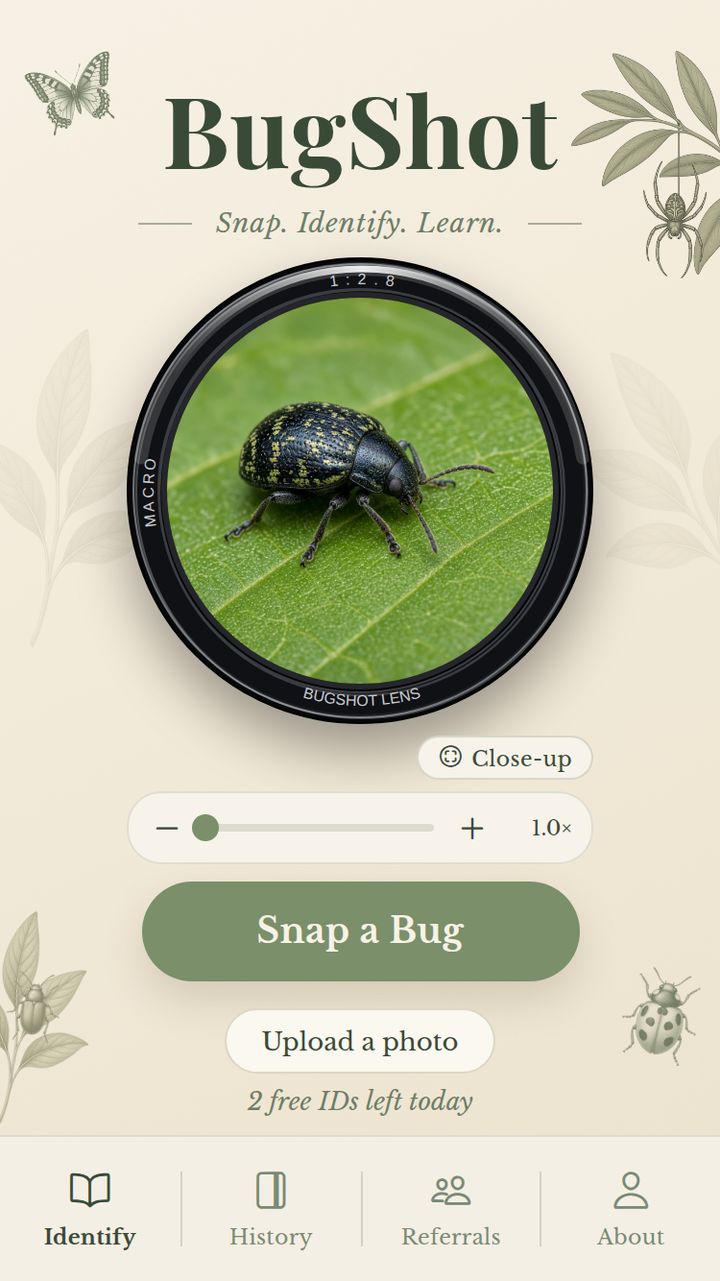
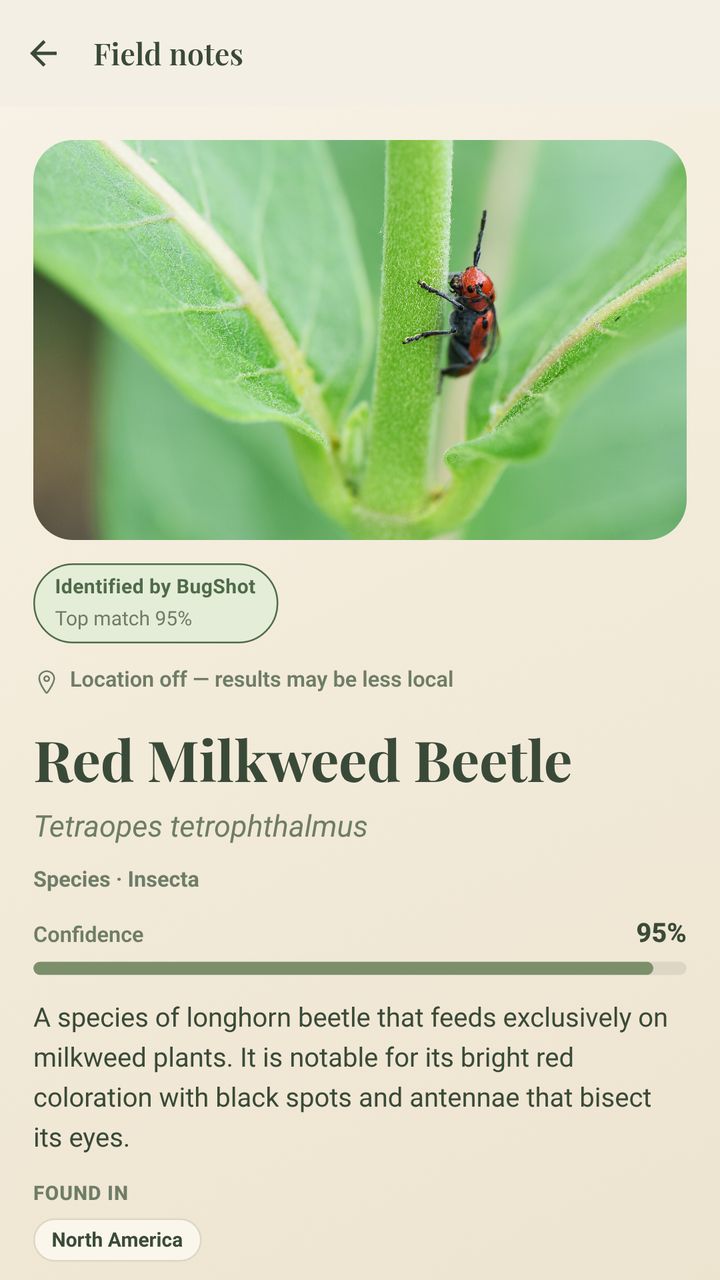
An insect identifier is a tool for answering a simple question: what insect am I looking at? BugShot approaches that question with a photo. You snap a picture of the insect, or choose one you already took, and the app returns a likely identification with a confidence level and a short description.
This is useful when the insect is unfamiliar, when you want to know whether it is a stinging wasp or a similar bee, or when you are trying to tell a pantry moth from some other small moth around the kitchen. A likely identification can help you decide what to read next, whether the insect is probably harmless, and whether the situation is something you may want a professional to inspect.
It cannot do everything a specialist can do with a specimen under a microscope. Many insect groups contain similar species that are difficult to separate from one picture. BugShot is designed to be honest about that: the result is a likely match, not a guarantee, and the confidence level is shown with the result.
How to photograph an insect
The quality of the photo matters more than any other step you take in the app. A close, sharp image in even light gives the identifier markings, body shape, and leg or antenna detail to work with. A distant or blurry image often leaves several insects in play.
Start with a still, close frame
Move in until the insect fills a good portion of the frame, then focus on the insect itself. If it is walking, wait for a pause or take several shots. Rest your elbows or the phone against something solid if you can do so without startling a stinging insect. If the first photo is soft, take another before the insect leaves.
Show the features that separate look-alikes
From above, you can often see wing patterns, color, and overall shape. From the side, you may see whether the abdomen is shiny or fuzzy, how the insect holds its wings, or how long the legs and antennae are. Those are the details that separate carpenter bees from bumble bees, or some wasps from bees. If the insect is on a leaf, a stem, or food packaging, it is fine to include a little of that context, as long as the insect remains the main subject.
Avoid relying on heavy digital zoom. Move closer if it is safe to do so. Do not reach toward a wasp, hornet, or bee to get a macro shot. A slightly more distant photo taken safely is better than a close photo that puts you at risk.
Lighting
Use even, natural light when you can. A window, an overcast sky, or open shade usually shows color more accurately than a direct flash, which can glare on a beetle’s wing cases or flatten the texture of a moth. If you must photograph at night, try lighting from an angle. Take more than one frame if the first one is dark or blown out.
Insects people often photograph in U.S. homes and yards
The insects below are among those that commonly send people looking for an identification in the United States. What you see depends on the region and the season, and this is not a catalog of every species.
Kitchen, pantry, and bathroom
German and American cockroaches are frequent indoor identifications, especially in kitchens and bathrooms; they differ in size, color, and markings, and a clear photo of the full body helps. Several kinds of ants forage indoors; a close-up of the waist, antennae, and size, plus where you found them, is more useful than a wide shot of a trail alone. Silverfish are usually found in bathrooms, basements, or around paper and are often recognized by their tapered, silvery bodies.
Indianmeal moths and other pantry moths appear around dry goods, often with larvae or webbing in a package. Small beetles and weevils may be in flour, rice, spices, or pet food. Fruit flies gather around produce or drains; drain flies, which look fuzzier and more moth-like, are often associated with sinks and showers. Getting close enough to see wing shape and body size helps tell these small flies apart.
Living rooms, bedrooms, and closets
Carpet beetles, and especially their bristly larvae, show up near carpets, wool, or closets. They are sometimes mistaken for bed bugs. Bed bugs are flattened, usually found close to sleeping areas, and are a case where people often want a careful identification. A sharp close-up from above, and a photo of where the insect was found, is the most useful pair of pictures. Even then, if you suspect bed bugs, consider a professional inspection rather than relying only on an app result.
Occasional outdoor insects also wander in: ground beetles near doors, lady beetles in the fall, boxelder bugs or stink bugs on sunny windows, and various moths around lights.
Yards, porches, and eaves
Bees and wasps are among the most common outdoor identifications, in part because people want to know whether something can sting. Yellowjackets, paper wasps, honey bees, bumble bees, and carpenter bees are often mixed up. Lady beetles and their look-alikes cluster on walls. Many beetles — from familiar lady beetles to longhorn beetles on flowers and trees — are photographed in gardens. Mosquitoes, crane flies (sometimes mistaken for giant mosquitoes), and midges appear around lights and vegetation.
Look-alikes worth slowing down for
- Carpenter bee versus bumble bee: a shinier, less hairy abdomen often points toward a carpenter bee, but check a close photo rather than assuming from size alone.
- Honey bee versus yellowjacket or wasp: body hair, color pattern, and waist shape are easier to see in a side view.
- Asian lady beetle versus other lady beetles: look, if you can, at the markings just behind the head, knowing that color and spot count vary.
- Bed bug versus carpet beetle or larva: shape, legs, and location in the home matter; a poorly focused photo is easy to misread.
- Fruit fly versus drain fly versus fungus gnat: size, wing shape, and where they gather are often the clues.
- Indianmeal moth versus other small brown moths: pantry moths are often found with food, but other moths come to lights; a clear view of wing markings helps.
If two names seem equally plausible, treat both as possible until you have a better photo or another source of confirmation.
How BugShot presents a likely insect identification
BugShot returns a likely identification and a confidence level. A high-confidence top match means the app has a strong estimate from that photo. A lower confidence score, or a short list of candidates, means more than one insect could fit what it sees. That can happen with similar species, an odd angle, a nymph or larva, or a photo that is dark or blurry.
The word “likely” is there so the result is not read as a final species determination. Insects are a huge group, and many species are separated by details a camera phone may not capture. You can improve the odds by taking a closer picture, adding a second angle, and, if you wish, allowing approximate location so the app can favor insects known from your area. Location is optional and is not required for an identification.
Read the short description next to the result and compare it with the insect in front of you. If the description does not fit, the likely match may be wrong, or the photo may not have shown the right details. A second photo is often the fastest next step.
Safety notes for stings, bites, and infestations
Most insects people photograph around the home are not a medical emergency. Some can sting or bite, and a few people have serious allergic reactions, especially to bees, wasps, or yellowjackets.
If someone has trouble breathing, swelling of the face or throat, dizziness, fainting, or widespread hives after a sting or bite, seek emergency medical care immediately. In the United States, Poison Control is available at 1-800-222-1222. Do not wait for an app identification before getting help in those situations. BugShot is not a medical device and cannot tell you whether a reaction will become serious.
Give stinging insects space. Do not swat at a wasp nest or reach into a cavity to photograph whatever is inside. If you need an insect removed from skin, or you are not sure what stung you, medical advice is more important than a perfect photograph.
If you keep finding many insects in food, in a bedroom, or throughout a building, or if you see damage you cannot explain, a licensed pest professional can inspect the site. A likely identification can help you describe what you found. It does not replace a visit to the property.
Privacy and pricing
BugShot is made by United Ora Inc. You can use the insect identifier without an account and without ads. Free identifications are available every day. BugShot Pro is an optional subscription for up to 400 identifications a week, purchased through the App Store or Google Play. Friend-code bonuses are available if you choose to share or redeem a code; they are not required.
When you identify a photo, it is sent over HTTPS to be processed. Location is optional, approximate, and not stored. History stays on your device unless you clear it. For a complete description of how photos and related data are handled, and how to request deletion, see the BugShot Privacy Policy.